Robot Laser Welding Demonstration for New Energy Battery Box
As a core protective component of new energy vehicles and energy storage systems, battery boxes impose extremely high requirements on welding tightness, structural strength and dimensional accuracy. Traditional welding processes are prone to defects such as pores, cracks and excessive deformation. Robotic laser welding features concentrated energy input, low heat input and a large depth-to-width ratio of weld seams, enabling efficient and stable welding of battery boxes.
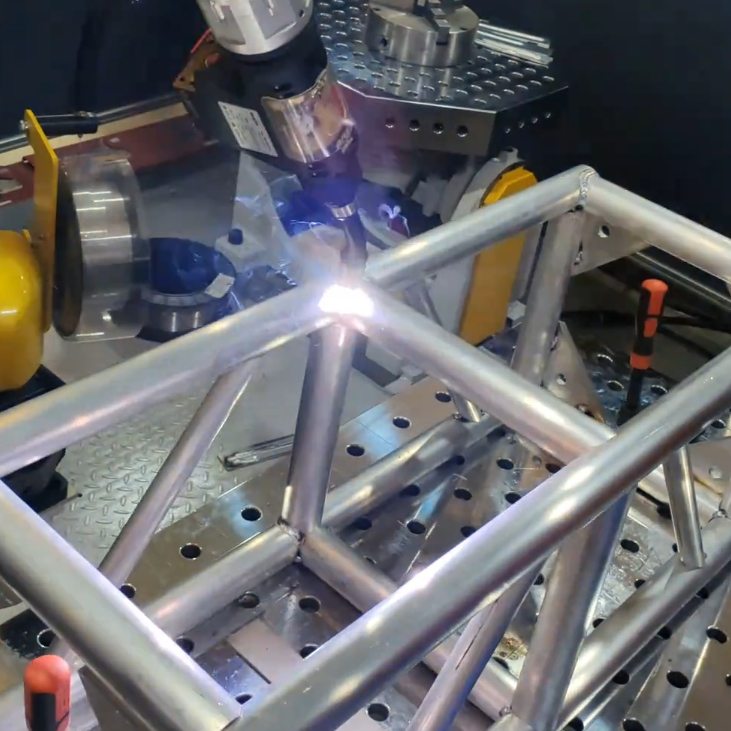
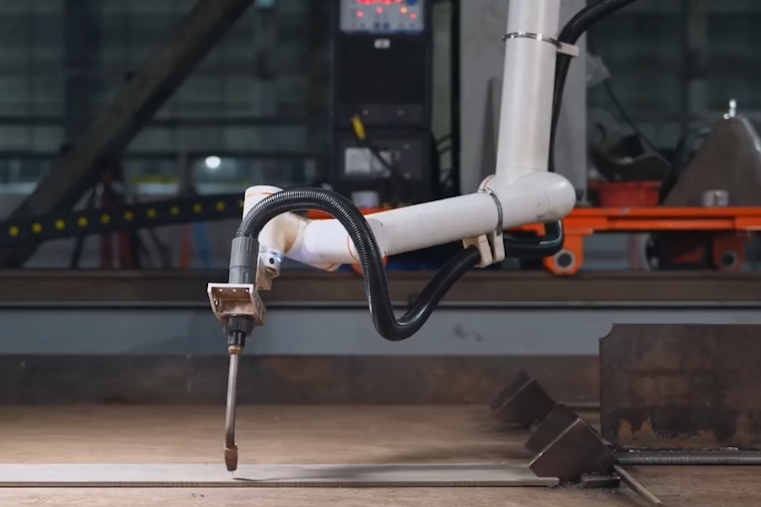
This demonstration adopts an industrial robot equipped with a fiber laser welding head to perform automatic welding operations on battery box housings. With visual positioning and weld seam tracking technology, the system accurately identifies box joints and corrects trajectory deviations, resolving welding difficulties caused by assembly errors. Surface cleaning and tooling positioning are conducted on workpieces before welding, and assembly gaps are strictly controlled to lay a solid foundation for guaranteed welding quality.
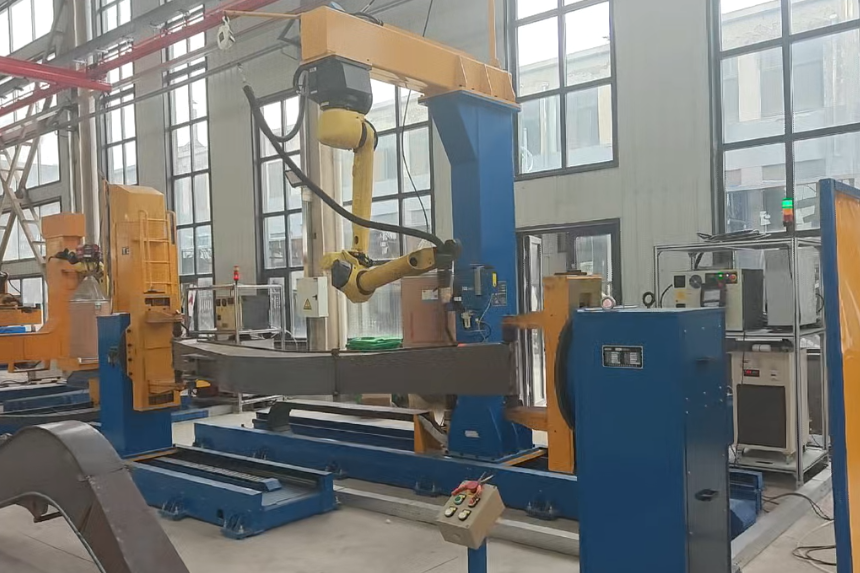
Both continuous and pulsed laser modes are applied in the welding process, with precise control over laser power, welding speed and defocusing amount. Deep penetration welding is realized with low heat input, which effectively suppresses box deformation and ensures uniform and aesthetic weld seam formation. The high energy density of laser welding allows filler-free autogenous welding of battery box welds, reducing the introduction of impurities and improving the tightness and corrosion resistance of welds to meet IP protection rating requirements. The robot is adaptable to multi-angle and multi-pass welds of the box, achieving full-process automatic operation via preset programs with high consistency and greatly improved production efficiency. The entire process fully demonstrates the full-process standards of battery box manufacturing from positioning and welding to quality control, providing an automatic welding solution with high efficiency, low deformation and high reliability for new energy battery boxes.